Key Takeaways
- Most operable wall and door providers are constrained by their manufacturing methodology, which limits design options. Raydoor’s design-first approach breaks from this pattern by offering a wide range of customizable frame, insert, pattern, and hardware combinations that can be tailored to any project’s functional and aesthetic requirements.
- Custom sizing means no compromises on fit. Raydoor builds every system to fit your specific opening, so there are no standard sizes to conform to beyond maximum dimensions. This is a meaningful advantage for architects and designers working with non-standard or complex spaces.
- Insert options give designers control over privacy levels. From fully transparent to fully opaque, Raydoor’s insert materials offer a spectrum of privacy and translucency, including decorative options from brands like Lumicor and 3Form, as well as custom film artwork applied directly to panels.
- ADA compliance is achievable without sacrificing design intent. Raydoor systems can be specified ADA compliant through hardware selection and custom rail configurations, including wider bottom rails for wheelchair access, without requiring a structural or aesthetic overhaul.
- Raydoor systems can be a focal point or a background element, depending on the project’s needs. Whether the goal is to make the door system a statement feature or to have it blend seamlessly into the surrounding architecture, the depth of customization options supports both outcomes.
Variety Of Options
In the realm of operable walls and doors, many providers have a very particular niche, often based on their manufacturing methodology and material usage. Those constraints drastically limit the amount and type of options available to designers and architects, making them less flexible tools in achieving the functions the design sets out to perform as well as the aesthetic. And then there are additional requirements such as compliance with ADA standards which add to the list of items that may require something special of a door system i.e. a larger bottom rail so that wheelchair users can push through.
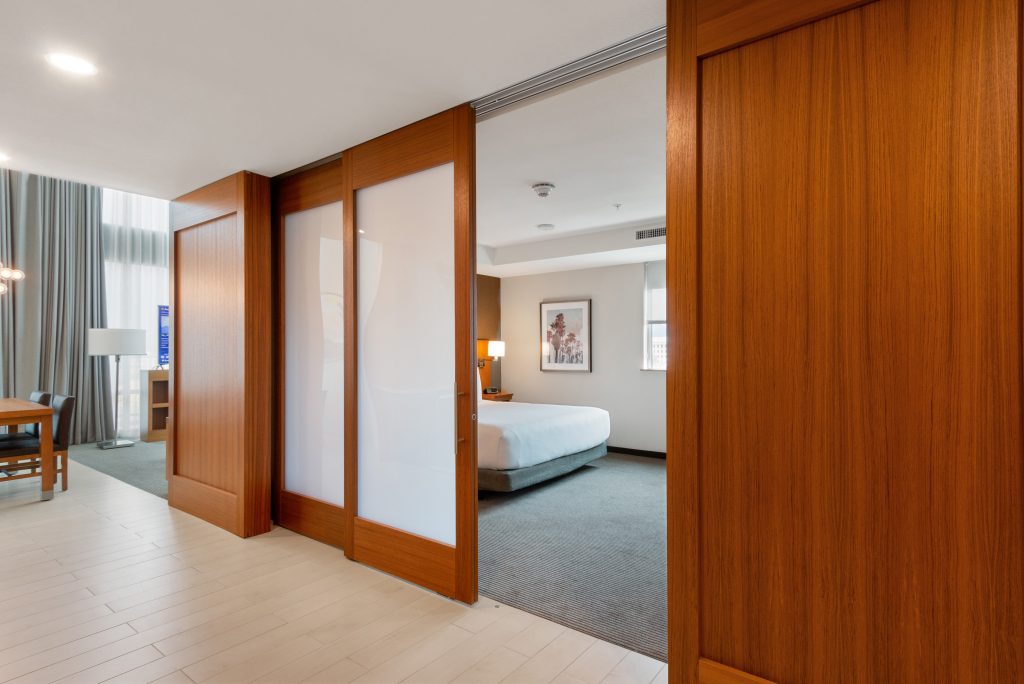
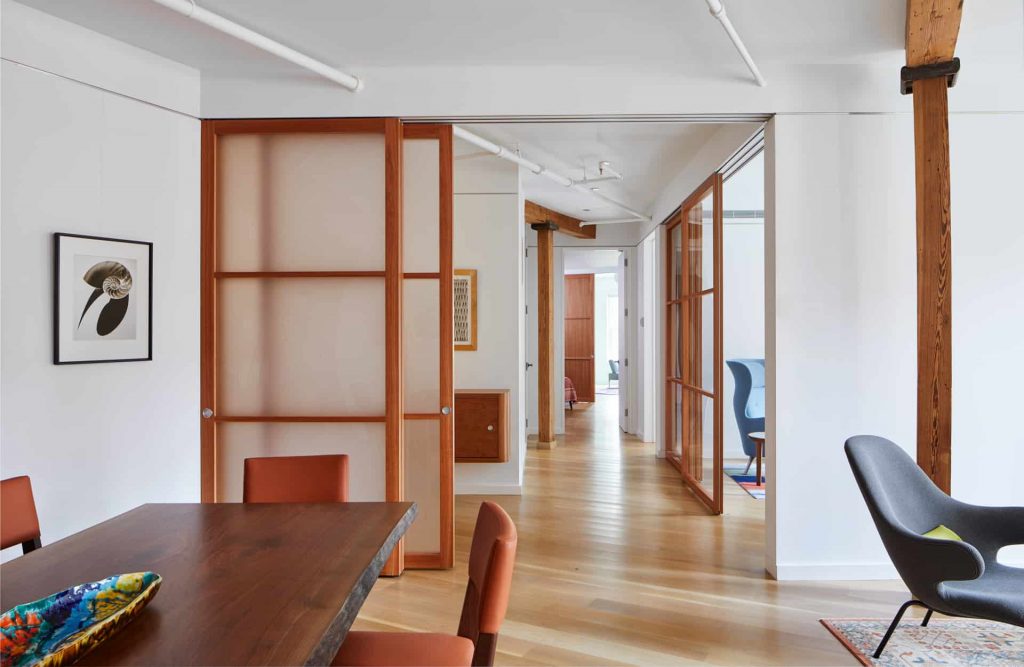
Any architect or designer will tell you options are a must, both to meet requirements of the project and to facilitate the expression of their design. Along with the aforementioned custom bottom rail, Raydoor systems allow you to play with the door stile if you are choosing from our veneer options. Our standard 3” stile and rail suit most, but having the choice can help to integrate the doors with built-in cabinetry or other details in the space. In addition, we offer the option of lattice patterns (a muntin or series of muntins within the panel) to create divided lights within the door and just to create a unique pattern. That flexibility extends to the system type itself. Depending on your project, you may be working with a single sliding panel, a bypassing configuration, a wall or pocket wall system, or something like a stacking or wing wall setup. Each one changes how panels move and interact with the space around them, which affects everything from how you plan the opening to how the finished door reads within the design.
Color To Match Any Project
If our standard laminates don’t quite match the color you’re going for on your operable wall or folding door system, you can select from one of our clear-coated, stained or painted finishes on veneer. Taking the options one step further, we offer color-match for stains and paints and even veneer-species match. All of these are constructed specifically for your project meaning there are no sizes of doors to conform to (other than maximum sizes) – we build our systems to fit your opening.
Project Flexibility
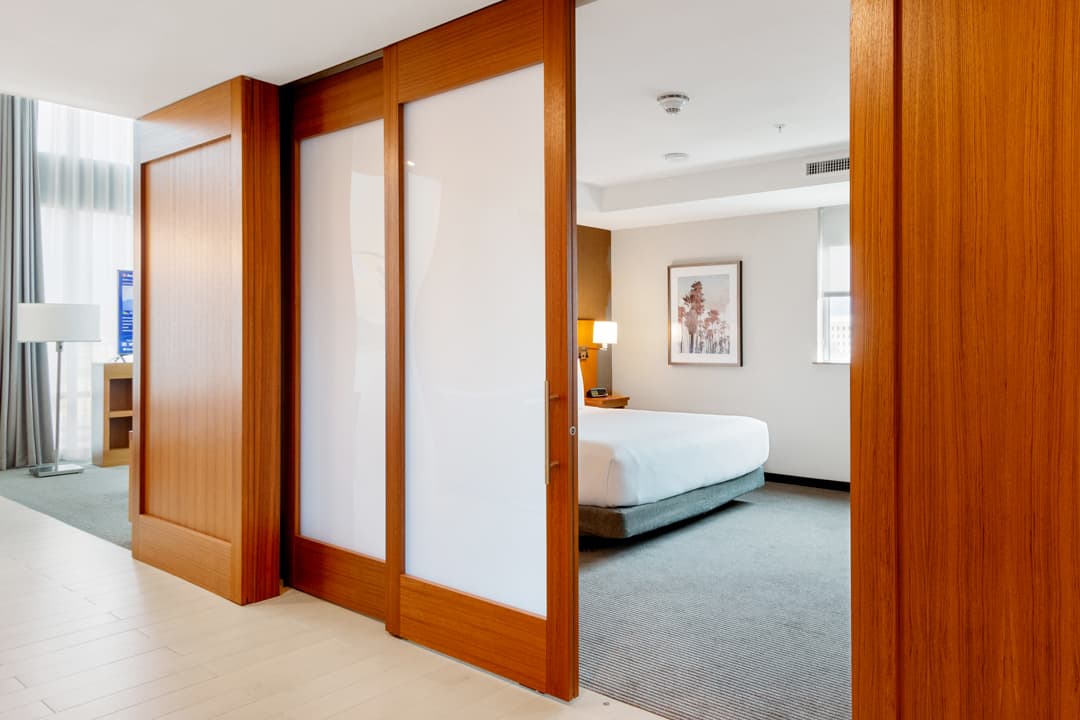
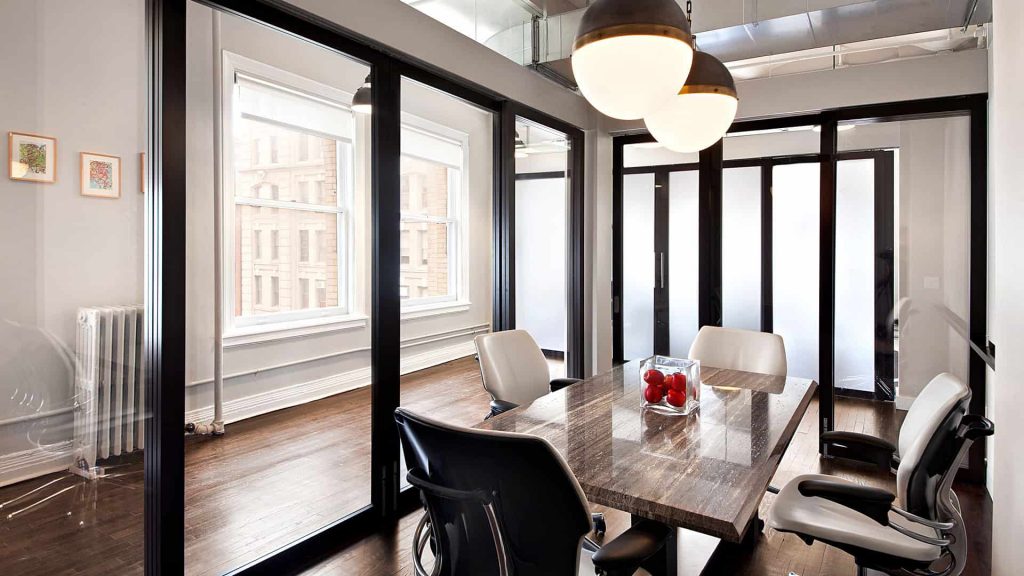
Continuing the theme of customization, our inserts offer varying levels of privacy from completely transparent to opaque with numerous levels in between and translucent or not as the space requires. The insert itself is a quarter inch thick layer of acrylic or wood sandwiched between two identical frame halves, a patented construction that fuses all three layers together and actually turns the insert into a structural element. That means the material you choose for visual effect is also doing real work within the panel. We can also use more decorative inserts from the likes of Lumicor or 3-Form and can even accommodate custom artwork applied as film. Go really wild and make a different statement on each panel to create a kaleidoscopic effect as doors slide past one another or as they stack. Beyond inserts, patterns are dimensional trim options bonded directly to the panel surface, giving you another layer of visual control or a decorative element, whether you’re working with one of our standard designs or developing something custom for the project.
While there are certain standards and requirements as with any product, it has been Raydoor’s goal to give designers and users the flexibility to tailor their operable wall or door system to enhance a space and a design, even becoming a design feature if that’s preferred. Just as easily, Raydoor systems can be customized to blend seamlessly with their surroundings, sliding silently while providing added functionality without standing out. Let us help you achieve the goals of your project with the flexibility to make Raydoors your own in more ways than one.